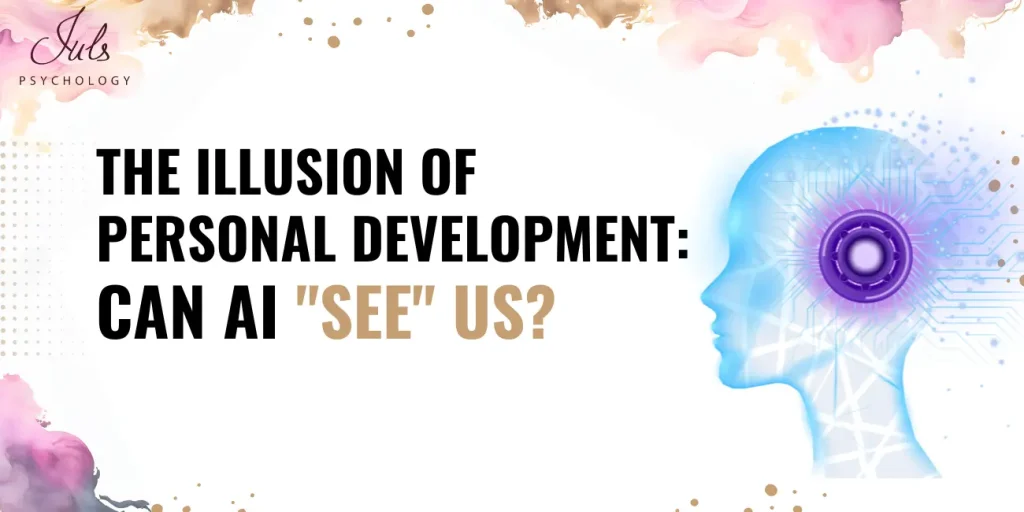

Beyond the Prompt: How AI-Driven Cognitive Offloading Erodes Product Judgment (And How to Reclaim It)
The modern product landscape is facing a silent crisis: the atrophy of strategic conviction and human creativity. As generative AI tools become embedded in daily workflows, teams feel that they are more productive because they see the amount of micro-decisions that they are able to resolve on a daily basis, so task completed volume increases. But beneath this surface-level velocity lies a dangerous cognitive trap.
As a business psychologist, my job is to understand the human side of the tech business, and to run analysis, improve operations, and bring clarity at the C-level. Behavioral Science is my way to show founders why they may have a sharp product and people still don’t engage, adopt, or use it as expected. You can build a technically flawless engine. Features that are brilliant on paper. But once that product meets a real person, with real habits and real hesitations, the theory stops mattering.
To protect human ownership and restore cognitive rigor, we must systematically rebuild how we partner with technology across three foundational pillars.

Do you know how the decisions are made?
Sometimes I catch teams that they deliver output without being able to interpret the outcome. They don’t understand the assignment, they understand exactly the result.
Their short memory is not responding to questions, they cannot recall decisions made 5-minute ago, they cannot reverse back the logic behind their solution development, and they simply don’t understand what they’re doing.
And because they’re cognitively overwhelmed and experience cognitive fatigue, they simply lose their essence that they are the expert who actually decide those problems.
So in time, their critical thinking is lowered down, while their productivity could look unaffected or even significantly increased in time, but their ability to understand and comprehend workflow, the internal logic, and to interpret the outcome, to look for risks is decreasing.
Cognitive offload when it comes to day-to-day operation should be balanced because people are losing their sense of competitive experts. In time, they start to feel that they cannot fulfill their duties and the AI can substitute that, which triggers their FOMO, anxiety, and imposter syndrome, and actually lowers the quality of their professional development.
Pillar 1: Recognizing and Countering Cognitive Offloading
When teams are using AI in everyday decision-making, the illusion of competence takes over. People become tired auditors of machine-generated grey noise and similar content.
This pillar explores the raw truth that when you outsource your working memory to a prompt, you are starving your own cognitive schema. Speed without comprehension is just sophisticated drift and we don’t want our decisions to change our original trajectory.
Because they have to make so many micro-decisions, they simply instruct and prompt the AI to revise, look for mistakes. AI says that they’re correcting some mistakes and they’re shipping the result without actually verifying.
When a team cannot explain their decision-making as a process and just as a “prompt and result” or “request and an output” —that’s a clear signal that “human-in-the-loop” interpretation and expertise is missing. We’re losing the value layer here very quickly even with simple everyday tasks, which makes automations cognitively taxing long-term for the company because they are producing stereotypical mistakes. More importantly, on an individual level we may be objectively more productive but the overall team creativity is decreasing.
Pillar 2: Mastering the Craft vs. Crap Matrix
My job is to help founders and builders understand that if the AI is bringing results that are consistently not ready or at least almost ready, there really needs to be a reversal of the process on how AI makes decisions and a deliberate push to bring more determinism. Ideally, without AI we should be able to produce same output, with the same quality, sacrificing only speed and volume, not the essence and the meaning behind the solutions and the decisions.
If your process completely collapses the moment the AI is removed, you don’t have an automated workflow—you have an invisible dependency. True efficiency means you own the core logic of your decisions, not just the output.
My job is to help people not only distinguish between monotonous, automatic, everyday, repeatable work that could be automated, but also to look closer inside these types of tasks and look for steps where critical thinking and decision-making are actually what makes things different or even special.
Otherwise, people are so tired from auditing the result and the data that at the end of the day, with so many micro-decisions to make, they surrender the underlying architecture.
This is how we build sustainably: when we know the value within the mundane autonomous tasks and we describe that as a process, we know how to handle hallucinations and fabricated data inside the workflow. Otherwise, we have only prompt-based, result-oriented performance that really disrupts the quality of the original vision and the delivery consecutively. When the human element dissolves into passive shipping, we lose the original intent entirely.

Pillar 3: Deploying Socratic Prompting and Rigorous Question Trajectories
It’s important to know that the Socratic method requires improving the quality of questions, not only asking some or more questions.
Asking questions doesn’t automatically mean you’re thinking critically. If you are just using questions to hunt for a comfortable confirmation, you aren’t building a co-pilot; you’re building an AI echo chamber.
When I bring Socratic methodology, I always have a couple of KPIs that we use to prepare the question framework itself.
- For example, is the question relevant? Because we humans are profoundly prone to asking many stupid questions.
- The second thing is thinking about the timing. Is it a timely question?
- Is it a resonating question? It could be relevant to the task, but is it resonating with the entire bigger picture?
- How does this question sit within the bigger picture?
- How does it fit or not fit inside the current situation?
Just asking questions doesn’t mean that we are moving in the right direction.
My job is to help people understand how to build a trajectory by using more rigid, discriminative, and descriptive frameworks that allow questions to improve the quality of the prompt, the search, and the task orientation. We need to understand the rules, we need to understand the specifics of the system, and this is how we practice better asking.
Because when we rely on single-question answers, we never question that reality. We think that this is the absolute truth, that this is a valid answer. In reality, it could only be partially true. So, my job is to bring the critical thinking layer back into play by framing questions that controversially prove the point of the other perspective, expose hidden risks, and challenge what we are missing.
Again, the quality of the questions and reframing the different layers of the search query demand relevance, counterpoints, and consistency checks—evaluating how each question relates to the previous one as an elicited resonation of inquiry. Those are the most critical criteria that I use when we are building frameworks or training people on how to improve the quality of their questions.
Reclaiming Human Ownership
True innovation has never been about how fast you can prompt an algorithm to generate an answer. Today, more than ever, innovation is all about the depth of the friction, the rigor of the process, and the unyielding ownership of the human expert behind the work.
When we surrender our cognitive processing to automated convenience, we sacrifice our competitive edge, our strategic intuition, and our professional confidence.
Protecting your product judgment doesn’t mean rejecting AI—it means mastering the boundary between automation and craftsmanship. By auditing your workflows for true process determinism, recognizing the hidden toll of cognitive offloading, and upgrading your inquiry through rigorous Socratic KPIs, you stop being a tired auditor of machine grey noise.
You step back into your rightful place as the creator, the decision-maker, and the true expert of your own vision.

Is your business loosing momentum?
Run the People-Product-Market Fit and discover what’s actually costing you retention.
How does human ego kill tech product development?
Denial: Refusing to admit the product has dark sides, missing pieces, or that clients genuinely struggle to see the value. Denial keeps you locked inside your own assumptions. Real market momentum means expanding what you consider “normal” to include how other people see it. See, the market isn’t just numbers. That’s actual people.
Deflection: Rejecting data, pilot feedback, or outside analysis because it’s uncomfortable. A client once told me I was deliberately poking holes in her business just to sell my services. She was defending against the data, not against me. That’s what deflection looks like from the inside, and it’s normal when you feel threatened. We can overcome our fears and still be brilliant decision-makers if we remember that at this stage of development, our feelings are irrelevant. Only client feelings matter, and we have to protect them, not our ego.
Wrong attribution: When interest doesn’t convert, teams blame the ICP, the positioning, the market. Targeting matters. But blaming the market blinds you to what’s actually happening inside the product experience. Both your engaged and disengaged users are giving you real data. Ignore either one, and you stay blind to what’s actually blocking conversion. Your feature development lies on the continuum between “highly relevant” and “highly irrelevant.” Your choices, actions, and communications can move the needle, not the market’s perception per se.
You can’t out-market or out-hire a failure of human alignment
/Ask your users & clients these questions/
If MRR is flat or falling despite new hires, new sales spend, more GTM, the problem was never really the market. It’s the fit between what you built and the people you think you built it for.
You don’t have to guess at the answer. Ask your users directly. Here are ten questions that surface the real data, not the polite version. Take them, adapt them, send them, then listen to the voice of your people:
1. What’s the one feature you’d miss most if we disappeared tomorrow, and why that one, specifically? [Isolates real value from feature-list noise. People rank; they don’t list.]
2. What made you choose us over what you were using before? [The decision moment tells you what actually broke the old habit. Everything after that is retention, not acquisition.]
3. Think of a week you almost stopped using us. What made you stay, or what would have made you leave? [Churn risk lives in near-misses, not in exit surveys. This is where the real friction hides.]
4. If we didn’t exist, what would you actually do instead? Not “nothing.” What’s the real fallback? [Tells you who you’re actually competing against. It’s rarely the company you think.]
5. How urgent is this problem for you right now, this month, not someday? [Urgency is what turns interest into a decision. Without it, you’re selling to people who agree with you but never buy.]
6. Does using us feel like removing a weight, or adding a new one to carry? [Direct read on whether you’re solving the crisis or quietly relocating it.]
7. What’s still missing before this becomes part of your routine, not something you only remember when it breaks? [The gap between “useful” and “habitual” is where most products stall.]
8. If this problem stays unresolved six months from now, what does that actually cost you? [Makes the cost of inaction concrete. If they can’t answer this, the pain wasn’t real to begin with.]
9. Did the price feel fair for what you got, or does it still feel like a bet you’re waiting to see pay off? [Fairness, not cost, is what predicts renewal.]
10. What would you tell a friend in your exact position, doing your exact job, if they asked whether to trust us? [Strips away the performance of a review. This is the answer they’d give with no one watching.]
Send these to your engaged users and your disengaged ones. Both are telling you the truth. You just have to be willing to hear it from either side. And if you want help interpreting the data and turning it back into operational and strategic decisions, just contact me.
Before you scale the funnel again, ask yourself: what does your product actually cost the people using it?
How to Plan Your Business Growth?
OUR PUBLIC RELATIONS:
Featured In & Our Official Partners

OUR CUSTOMERS:
Client Success Stories

We are proud of our 15-year track record of success. While we don’t achieve every goal, we’re relentless in pursuing excellence.

We are the innovators you need to turn your business idea into a market disruptor. Make your ideas stand out.

Confidentiality is key to our success. We work under strict NDAs to protect the data and competitive advantages of our clients.
OUR TEAM:
Who are We
OUR ARTICLES TELL REAL STORIES:
Business PsychoLogic Frameworks & Applied Tools

Beyond the Prompt: How AI-Driven Cognitive Offloading Erodes Product Judgment (And How to Reclaim It)
Beyond the Prompt: How AI-Driven Cognitive Offloading Erodes Product Judgment (And How to Reclaim It) The modern product landscape is facing a silent crisis: the atrophy of strategic conviction and…
Why Do Most Startups and Scaleups Really Fail?
Why Do Most Startups and Scaleups Really Fail? Look at any startup post-mortem and you’ll hear the same words: cash flow, timing, product-market fit. Rarely does anyone name the real…

When Do You Stop Believing in Yourself and Your Business? [My 3 Bold Steps]
When Do You Stop Believing in Yourself and Your Business? [My 3 Bold Steps] When do you stop believing in yourself and your business? Today I will share my experience…