
Most businesses do not fail because the strategy is wrong. They fail because the promise, the delivery, the leadership behavior, and the AI workflows do not line up.
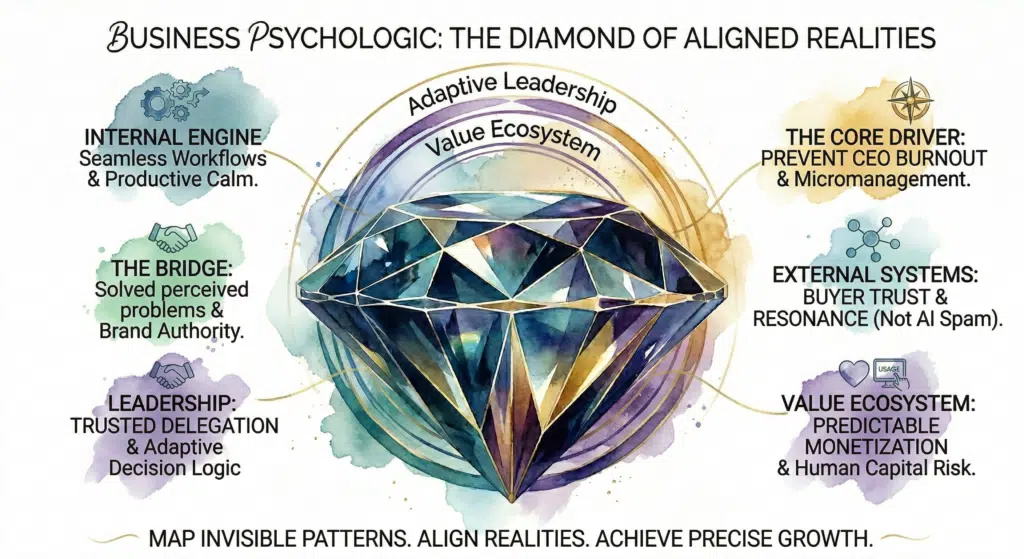
Business PsychoLogic is a 4-week diagnostic that stress-tests that gap. It surfaces the 2 to 3 failure points creating friction, leakage, and stalled growth, then turns subjective impressions into objective operational findings.
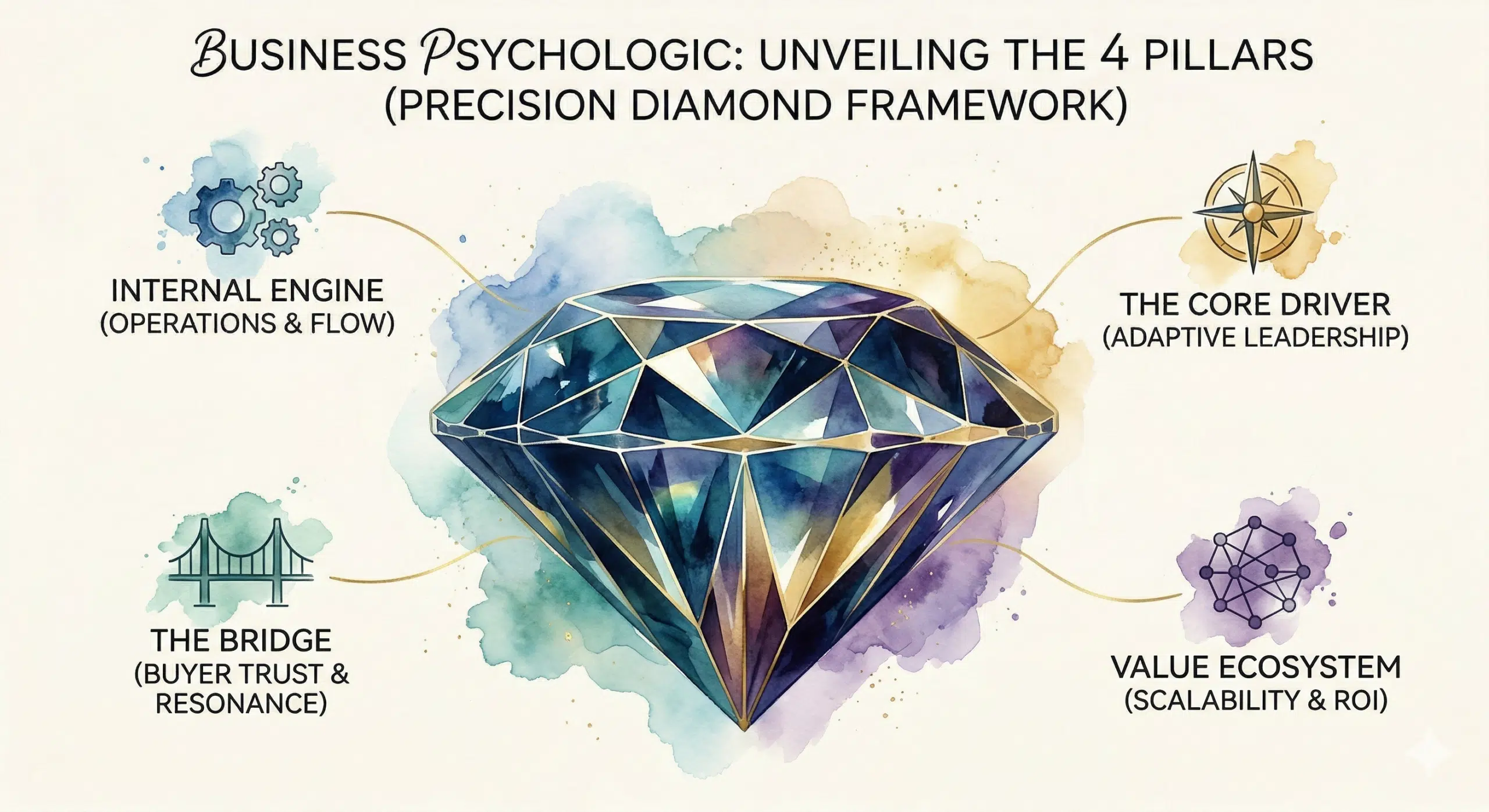
We look at four layers: internal systems, GTM from the inside out, leadership and decision logic, and the value ecosystem, including AI and scalability. If a company is not behaving as predicted, the problem is usually not hidden in the product alone. It is hidden in the human system around it.
Explore the invisible patterns of how your people work, lead, and use technology.
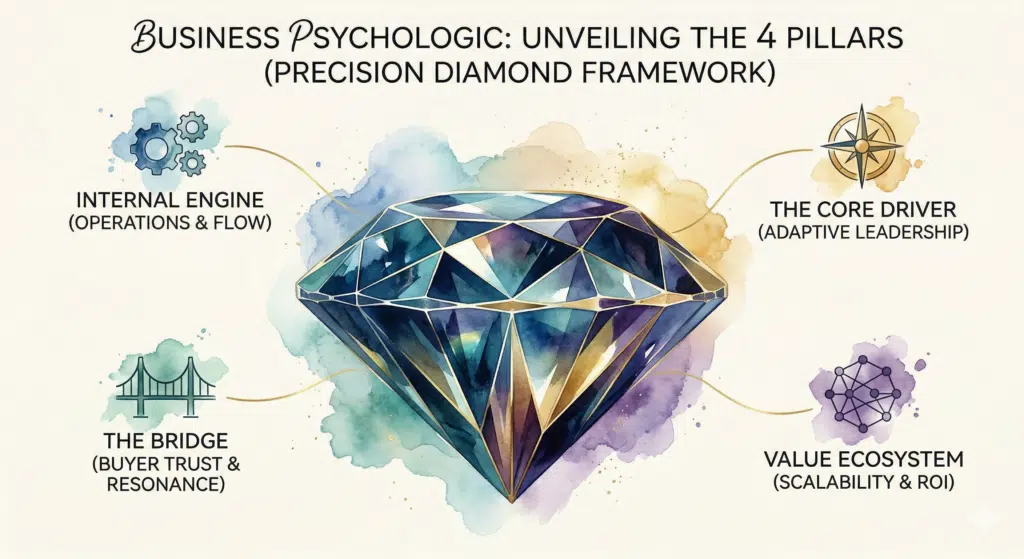

1. Internal Systems (Operations & Flow)
Stress-testing the machinery of daily execution.
Our analysis produces a heatmap of your organizational health, distinguishing between processes that act as a cage for compliance and those that serve as a support system for autonomy. By resolving these structural misalignments, we stop the drain of talent waste and replace it with a calibrated engine designed for “flow.”

2. The “GTM from the Inside Out” Engine
Bridging the “Reality Gap” between promise and experience
A go-to-market strategy is more than a sequence of tasks. We see it as a cultural handshake that can easily miss the mark. When a GTM motion designed for the transactional urgency of one market is deployed into a region that prizes trust-building and long sales cycles, the messaging often lands as aggressive or tone-deaf.
To succeed, the outreach cadence and partnership models must be calibrated to the local rhythm of business, ensuring the strategy respects the market it intends to win.

3. The Core Driver (Leadership & Decision Logic)
Solving the “Founder Bottleneck” through architectural translation
Leadership is an act of translation, and styles shaped in one context can often be “lost” when applied to a different team reality. A directive, high-urgency approach that sparks motivation in one culture may be perceived as micromanagement or a lack of trust in another.

4. The Value Ecosystem (AI & Scalability)
Stress-testing the digital tempo vs. human reality
The integration of AI often introduces a digital tempo that clashes with the human operating model of a team. When automated workflows and asynchronous tools are forced onto a group that values relationship-driven collaboration, the technology can feel less like an assistant and more like a tool of surveillance.
Ready to explore your business reality and close the gap?
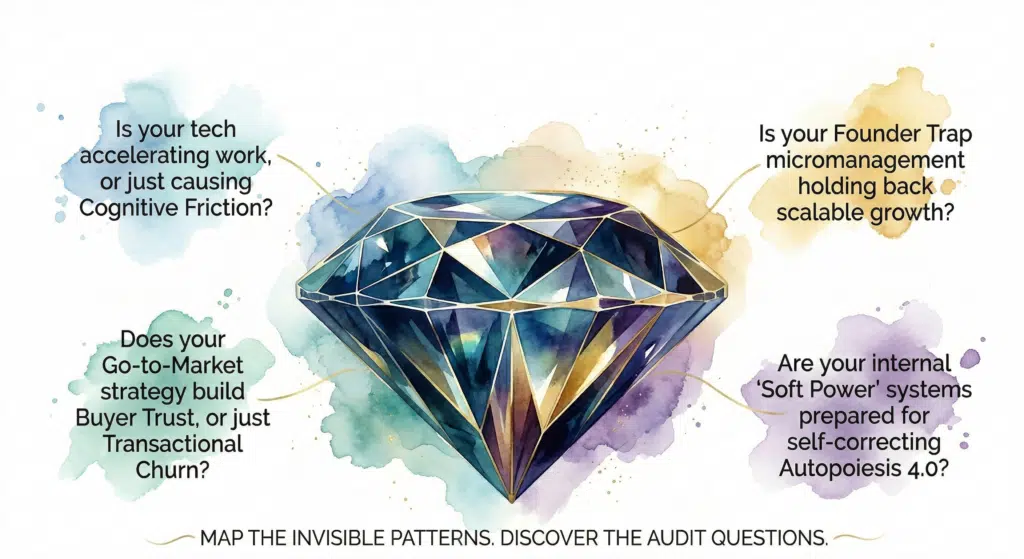
💡 The Outcome for your business:
Systemic Autonomy
(The Exit-Ready Engine)
The business transitions from being “Founder-Led” to “System-Driven.” By codifying leadership intuition and decentralizing decision-making, the organization achieves a state where growth is no longer limited by the CEO’s personal bandwidth. This outcome maximizes the valuation of the company because the “knowledge” is an asset of the firm, not a prisoner of the payroll.
High-Fidelity Execution
(The Zero-Waste Model)
By closing the Reality Gap between GTM promises and operational flow, the business eliminates “Cognitive Friction.” The outcome is a drastic reduction in talent waste, lower client churn, and the removal of the “Hustle-Halt” cycle. Resources are shifted from fixing internal fires to aggressive market expansion.

Human-Centric Scalability
(The AI-Augmented Culture)
The integration of AI becomes a competitive moat rather than a source of team anxiety. The outcome is a High-Integrity Ecosystem where technology removes repetitive friction while humans focus on high-stakes empathy and complex strategy. This allows the company to scale its output and ROI without a linear increase in headcount or a decrease in quality.
If your business isn’t behaving as predicted,
the answer is in the human perceptions & behavior.






How to Plan Your Business Growth?
OUR PUBLIC RELATIONS:
Featured In & Our Official Partners

OUR CUSTOMERS:
Client Success Stories

We are proud of our 15-year track record of success. While we don’t achieve every goal, we’re relentless in pursuing excellence.

We are the innovators you need to turn your business idea into a market disruptor. Make your ideas stand out.

Confidentiality is key to our success. We work under strict NDAs to protect the data and competitive advantages of our clients.
OUR TEAM:
Who are We
OUR ARTICLES TELL REAL STORIES:
Business PsychoLogic Frameworks & Applied Tools
How to close the gap between your vision and the actual execution?
Most businesses do not fail because the strategy is wrong. They fail because the promise, the delivery, the leadership behavior, and the AI workflows do not line up. Business PsychoLogic…

Scaling the “Unscalable”: From 1 Room with 10 seats to a B2B Ecosystem 🚀 in 12 months
As we wrap up 2025, the entire team at Juls’ Psychology wants to wish you a season filled with peace, meaningful connection, and the courage to rest. This time of…
The Cognitive Portfolio and the 12 Skills of the Successful Leader in 2026
At Juls’ Psychology, we take a counter-intuitive approach to this season. For us, Q1 is never about aggressively onboarding new clients. Instead, it is dedicated to restructuring and optimizing our…