
Business psychology isn’t just about finding the “5 Key KPIs” or the “10 Best Practices” to achieve a new level of productivity. Our job is to combine knowledge from different scientific fields and to create new, disruptive philosophies.
I am passionate about thinking outside the box. AI doesn’t just create a bigger black box; it adds a new dimension to business. It blurs the line between objective, measurable KPIs (such as time, volume and the AI’s speed) and subjective, human-centered KPIs (such as perceived efficiency or the cognitive load of human agents).
It’s harder than ever to tell whether your business is investing in growth or simply depleting its resources. Why? Because traditional business KPIs aren’t helping you navigate the new personal and business complexities.
AI is a must-have tool, but we need to manage the risks in order to prevent the attrition of senior leaders who get burned in the process and pay the actual price of this new era of transformation, as I discussed in the previous article, dedicated to the human vulnerability of the modern “everyday invisible heroes”.
Our framework identifies the single biggest structural flaw in the current AI adoption narrative: The confusion between Motion and Progress.
If you “don’t have time” to read this, you are already in the danger zone. Stop making excuses. Growth happens outside your comfort zone. We’re here to support you every step of the way, because #YouMatter.
- The more complex a business system is, the easier it is to break
- The Business Psychology Translation:
- For decades, business metrics have operated in Three Dimensions
- What is the "Fourth Dimension"?
- The Efficiency Paradox: Why Your Dashboard is Lying to You
- The Exponential Impact of the Invisible Labor in Your Systems
- The Big Question: Who is Running Your Business?
- The C-Level Playbook: You Need a "Translator"
- The Cost of the Fourth Dimension: "Cognitive Friction"
- New Metrics for a New Reality
- My story ends here. But yours only begins
- The Path Forward
- Take Our Psychological Test for Burnout Prevention
- Our customers' TOP 10 questions
- Who are We
The more complex a business system is, the easier it is to break
Do we truly know the real investments we are making to transform our Human Systems and match these new AI trends?
Humans crave simplicity, familiarity, and cognitive ease. We are biologically wired to preserve energy. As CEOs, we are obsessed with productivity, efficiency, and ROI. Businesses must generate profits.
According to the latest IDC research, organizations are seeing an average return of $3.70 for every $1 invested in Generative AI.
But looking closer at the data reveals a different story—one of operational friction and human cost:
- The “Pilot Purgatory”: While firms run an average of 37 AI pilots, only 5 ever survive to reach production.
- The Alignment Gap: A staggering 40% of companies lack close alignment between business and IT.
- The Scramble: 51% of enterprises are still in the “Opportunistic” stage—reacting with disconnected experiments rather than a managed strategy.
Read the full IDC report for the benchmarks. Read my analysis below for the human reality that we need to acknowledge and respect.
In my previous articles, I focused on the “Hidden Debt” of AI ROI and how modern decision-making is burning out our leadership systems. Today, we focus on how to measure the AI impact on business. It’s obvious we don’t have the answer yet, probably because we’re trying to solve a new problem with an old mindset.
The Business Psychology Translation:
As a Business Psychologist, I see what these numbers hide. That “gap” isn’t just an operational inefficiency, but the sound of your human systems breaking. The “scramble” to scale AI without alignment is creating a massive Hidden Debt—paid for by the burnout and cognitive overload of your best people.
AI inserts a “Black Box” inside your “Business Box.” You are no longer the architect of your own logic; you are the verifier of a machine’s hallucination. If you continue to measure this with “Old KPIs” (speed, volume), you are measuring how fast you can fill your box with unverified noise.
Let me show you how business psychology discloses a new horizon by asking a simple question:

Who is able to see what is going on?
It is definitely not us, the human agents, even at the C-level. And it’s not the AI itself. Even if it has the capacity to answer, without the right prompt, its insights remain locked.
Our perspective today touches an angle that is often invisible: our own leadership blind spots. Because we can’t see what we can’t see, we live inside the problem.
So, here is the riddle: How do we know AI is solving problems when it generates so many new problems, new unknowns, and new missing pieces?
One of the first ways to solve this is by re-framing the problem. We cannot use AI-related KPIs to measure human productivity, human effectiveness, or human ROI. Because we never know the true investment humans make to work with AI—a cognitive cost and time loss I call “Invisible Labor“, and it is the silent killer of ROI.
“You cannot solve a problem with the same level of consciousness that created it.”
Albert Einstein
For decades, business metrics have operated in Three Dimensions
In the boardroom, we love our dashboards. We love our KPIs. We love the certainty of a spreadsheet that tells us exactly how much we spent and how much we earned.
For decades, we operated comfortably within Three Dimensions and we have measured our business success with a 3D ruler:
1. The Physical Reality: Our infrastructure, offices, and hardware. Everything we can put on a chart or presentation fits here. It is data that discloses hard facts and observable objects. We can see it, count it, and depreciate it.
2. The Digital Reality: Our software, code, and data pipelines. While these assets are harder to touch, the logic was clear: we could see the input in the box, we understood how the box processed the information, and we could predict the output. It was deterministic.
3. The Human Reality (Subjective): Our culture, leadership styles, and actual employee behavior. Whether good or bad, we managed to create an effective KPI system that trained our people over time how to fulfill their roles, how to perform, and how to absorb our culture. We turned subjectivity into manageable metrics.
Our business logic and idea of success was relatively simple: We knew how to measure these. We knew that if we invested in better software (Dimension 2) or happier people (Dimension 3), the business grew.
But AI has broken this model.
Generative AI has introduced a Fourth Dimension into business—a semi-realistic, semi-futuristic layer of operations that acts like a human but scales like a machine. And the reason C-Level leaders are struggling to see the real ROI of AI is simple:
You are trying to measure a 4D phenomenon with a 3D ruler.
What is the “Fourth Dimension”?
In Cyberpsychology, we see AI not just as a tool, but as an agent of semi-reality.
It generates content that looks human, sounds human, and feels authoritative. But unlike a human, it has no consciousness, no values, and no understanding of “truth.” It hallucinates. It mimics. It guesses.

AI is obsessed with the results, the output.
Humans are mission-drive creatures and we need to understand the meaning of the input/output in order to embed it in our processes and in our physical/digital reality.
This creates a new dimension of work that is neither purely “Digital” (it’s not deterministic code) nor purely “Human” (it has no soul).
But these metrics ignore the physics of the Fourth Dimension. They measure the generation of the asset, but they fail to measure the verification of the asset, the Human-related subjective dimension. And the math here is simple:
- Time to draft the email: 5 minutes
- Time to draft the prompt, to fact-check and double-check, re-design and final polish: 20 minutes.
Now, try to think about your ‘business box,’ with all the processes, logic, tools, hardware, software, and the entire human system dynamics. Extrapolate this problem with the ‘black box’ information processing, and you will see what I see: a lot of unknowns within our own business logic, a lot of chaos, and pre-defined output that we can’t double-check or verify—yet our entire business success relies on it.
The main question here is:
Is AI rewriting your business logic without your permission or awareness?
The Efficiency Paradox: Why Your Dashboard is Lying to You
We assume AI makes us faster because the output is instant. But we forget that the outcome requires human processing and this creates a new paradox:
The Deterministic vs. Probabilistic Trap
The “Fourth Dimension” described is simply Uncertainty: the unknown quantity of time needed for humans to process the output and make an informed decision about the quality of the outcome. Traditional software is binary (0 or 1). AI is probabilistic (maybe this, maybe that).
You cannot build a rigid, scalable business structure or process on a probabilistic foundation without a “Translator” to stabilize it.
Let’s look at the invisible psychological reality of what actually happens when your expert sits down to work with AI and what is the work reality they create together in real time:
1. The Linear Path (The Human Way)
When a human writes an email or code from scratch, the process is linear.
The process is straightforward: You have intention, you gather your thoughts and you execute an action. You know what you want to say, you find the words, and you say it. You are the architect of the logic.
The cognitive load is manageable because you are in control:
- Total Time: 5 minutes.
- State: Flow.
2. The Friction Loop (The AI Way)
When we introduce AI, we break that line.
You prompt the machine, and it gives you a finished product instantly. But now, the psychological work doesn’t end; it begins.
You are forced to reverse-engineer logic you didn’t create. You stop being a Creator and become an Auditor. You have to read the text, police the tone, and hunt for hallucinations. You catch a phrase that feels “off.” You re-prompt. You edit. You pause and ask, “Is this really my voice? Is this accurate?”
You are no longer in a flow state; you are in a friction loop of verification and doubt.
3. The False Positive
Your dashboard celebrates that “emails are generated instantly.”
But in reality, your expert just spent 20 minutes auditing a machine to produce a result that took them 5 minutes to do themselves. We haven’t gained efficiency; we have just traded creation for exhaustion.
Now, multiply that friction by every employee, every day, across every department. You don’t have an efficiency gain; you have a Systemic Blockage:
The AI Generation is fast (seconds), but The Human Verification is the unknown variable: if the output is “good enough”, it will take 5 minutes; if it’s garbage: 2 hours of fact-checking and exploring the logic behind the result.
We are moving from a Deterministic reality (logic we control) to a Probabilistic reality (logic we guess at). Business leaders are looking at the “AI Speed” variable and ignoring the “Human Doubt” variable.
AI Speed + Human Doubt > Human Speed
You cannot scale a business when your time is a random number.
The Exponential Impact of the Invisible Labor in Your Systems
As a business psychologist, I analyze business health through three specific lenses. Here is how the “verification burden”‘ and invisible labor break down each of your human systems, with some examples:
1. Internal Human Systems (Operations & Culture)
The Story of “Siloed Logic”
Imagine walking into your office. It is productive. It is quiet. But something is wrong. Your team has stopped talking to each other because they are too busy negotiating with the AI.
The operational workflow has shifted from “Human-to-Human” to “Human-to-Machine-to-Human.” In Marketing, the AI hallucinates one reality. In Sales, a different AI hallucinates another. Because your teams are isolated in their own “Verification Loops,” they stop cross-referencing the truth.
The result is Siloed Logic. You no longer have a shared organizational truth; you have generated approximations of it. The culture is fragmenting because the connective tissue — human conversation — has been outsourced to prompts or substituted by AI-generated summaries, one-line emails or AI note-takers.
2. External Human Systems (Market & Sales Psychology)
The Story of “Brand Hallucination”
Your Sales and PR dashboards look incredible. Outreach volume is up 500%. You are “scaling.” But look closer at the market response.
Your teams are exhausted verifiers, so they let “good enough” content slip through. To compensate for the lack of connection, they just increase the volume. They enrich 100,000 emails and launch massive campaigns, celebrating when they hit a 20% open rate or a 5% click rate.
But here is the hidden cost you aren’t tracking:
- The Firewall War: Your teams are spending more time fighting spam filters and warming up domains than actually selling.
- The “Burnt Lead” Ratio: AI often generates false marketing data or fails to deliver proper intelligence on a prospect. When you automate outreach based on bad data, you don’t just miss the sale—you burn the lead forever.
- The Hollow Scale: You are flooding the market with content that mimics your brand but lacks its soul. Buyers subconsciously detect the hollowness. They read the email, and they feel… nothing.
By increasing the volume without preserving the “Human2Human” spark, you are effectively automating your own irrelevance. You are shouting louder, but your influence is whispering.
3. Leadership Peak Performance (The Engine)
The Story of “Strategic Paralysis”
This is the most dangerous story of all. Look at your C-Suite. Leaders should be looking out for the horizon while steering the ship. Instead, they are staring at the engine room, trying to figure out why the machine is making noise and changing course without permission.
They have shifted from Strategy to Supervision. Instead of making one big strategic decision, they are forced to make thousands of micro-validations to ensure the AI isn’t destroying the company’s reputation.
The result is Strategic Paralysis. The leader is so tired from “training” the machine that they have no energy left to lead the people, manage the processes, deal with the actual changes, put out fires and crises, and most importantly, create new ideas.
Leaders are depleting their mental resources trying to govern your “Black Box” infrastructure.
The Big Question: Who is Running Your Business?
If your experts are busy verifying, and your leaders are busy supervising, who is creating the business logic? Currently, it is the AI.

We have introduced a Fourth Dimension—a semi-autonomous layer of logic—that operates between your C-Suite Vision and your Departmental Execution.
And right now, no one is managing that layer.
We have IT managing the code (Digital Reality). We have HR managing the people (Human Reality).
But who is managing the Translation Layer?
Who ensures that the AI’s “intention” matches the CEO’s vision, the human ethics and the innovative disruptive logic?
The C-Level Playbook: You Need a “Translator”
You must stop treating AI like Excel. Excel is a tool; AI is a junior employee who lies confidently.
You cannot solve this with more software.
You solve it with Governance. To stop this exponential loss, you must invest in the specific role I call “The Translator.” This is not a job title; it is a strategic function of your Leadership System and it is the only way to fix the equation.
The “Translator” (or Governor) acts as the Variance Control. Their job is to collapse the probability wave. They set the strict constraints (The Prompt Engineering, The Context, The Rule Set) that force the AI’s probabilistic output into a deterministic range.
- Without a Governor: The AI shoots in 360 degrees. (Maximum Uncertainty).
- With a Governor: The AI is forced to shoot down a narrow tunnel. (Managed Uncertainty).

Look at your current business processes. Identify every step where AI is used.
Ask this question: “Is there a human ‘Governor’ responsible for limiting the variance of this tool?”
If the answer is “No,” you are not automating; you are gambling. Install the controls or unplug the machine.
1. Define the “Intention Architect” Stop letting AI guess your strategy. You need human experts whose only job is to define the “Intention” before the AI is touched. The prompt isn’t the start; the strategy is the start.
2. The “Circuit Breaker” Protocol Your organization needs a rule: When does the human take over? If an expert spends more than 5 minutes verifying an AI task, the protocol must be: Stop. Delete. Write it yourself. You must authorize your team to abandon the tool when the “Verification Burden” exceeds the “Creation Cost.”
3. Measure the “Friction,” Not the Output Your new KPI is not “How much did we produce?” It is: “How much Cognitive Energy did we burn to produce it?”
The Future belongs to the Aligned. We are currently scaling chaos because we lack the translation between Human Wisdom and Artificial Speed. My role is to fix the Human System so the AI System stops rewriting your logic without your permission.
The Cost of the Fourth Dimension: “Cognitive Friction”
Because AI operates in this semi-reality, it requires a human counterpart to constantly police it. This creates a friction point that traditional KPIs miss more or less.
We are no longer paying our experts to create; we are paying them to audit. When an expert spends 10 minutes fixing an AI draft that took 30 seconds to generate, the “efficiency gain” is an illusion. But the cognitive cost and time loss are real. Auditing a machine is psychologically draining. It creates a state of chronic hyper-vigilance I call “The Panic Before the Send Button.”
If your KPIs don’t account for this friction, you aren’t measuring ROI. You are measuring how fast you can burn out your staff.
New Metrics for a New Reality
To survive this transformation, C-Level leaders must update their dashboard. We need metrics that bridge the gap between Hard Power (Tech) and Soft Power (Humans). It is clear that AI is not suited to this role.
The main perspective here is simple: as CEOs and leaders we need to start asking better questions.
Start with some small steps. DO not let the immediate output to delude you that this is a solution. Create a system that questions the Human-AI reality better, faster, more efficiently. Start imagining questions that match your unique business system and capture the essence of your amazing, innovative angle as an entrepreneur and creator.
Here are three 4th Dimension Metrics I use when diagnosing Human Systems with some simple, yet powerful questions for you as a good start:
1. The Verification Ratio
- The Question: For every 1 hour saved in creation, how many minutes are spent on verification?
- The Goal: If the ratio approaches 1:1, your AI deployment has failed, regardless of the output volume.
The Simple Idea:
Ignore how many emails, articles, or code lines are generated. This metric is now irrelevant. Measure the time spent fixing AI output. If it exceeds 50% of the time it would take to create it manually, forbid the use of AI for that task.
2. The Invisible Labor Rate
- The Question: How many hours of “invisible labor” (fact-checking, re-prompting, formatting AI text) are your high-paid seniors performing?
- The Goal: To quantify the financial leak caused by using senior talent as AI supervisors.
The Simple Idea:
Install the “Circuit Breaker” Policy: If you cannot verify the AI’s logic within 5 minutes, you must abandon the prompt and execute the work manually. Do not allow to fall into the “sunk cost fallacy” of trying to save a bad draft.
Appoint the “Translator” You cannot leave the AI layer unmanaged. Designate a human “Intention Architect.” Their role is to define the strategy before the AI is prompted. Do not let the AI suggest the strategy; it must only execute the tactic.
3. The Cognitive Friction Index
- The Question: Subjectively, does the tool make the employee feel “superpowered” or “drained”?
- The Goal: To measure the psychological sustainability of the tool. A tool that saves time but destroys energy is a net loss for the Human System.
The Simple Idea:
Audit Your “Cognitive Friction”: Ask your top performers one question: “Do you feel like a pilot or a janitor when using these tools?” If they feel like janitors cleaning up messes, you are failing to use the tool correctly.
The outcome from this simple framework:
Audit your workflow next week: Look at your team. Are they correcting AI (Friction) or are they selecting from AI options (Leverage)?
- If they are correcting, they are working for the machine.
- If they are selecting, the machine is working for them.
Fix the hierarchy. Make the human the Architect again.
AI allows us to see the “bigger picture”. But we must remember that AI is part of the picture. It is not the omniscient intellect.
Use it, but measuring it with a 3D ruler will break your business:
Old Way: Human thinks – Human writes. (Flow State).
AI Way: Machine generates – Human reads, doubts, fact-checks, rewrites. (Friction State)
New Human-AI Way: Human Architects (Intent) – AI Iterates (Scale) – Human Curates (Decision). (Leverage State)
The AI does not provide the answer. It provides options. It provides raw material at speed. It is the engine, not the driver. The human does not “fix grammar.” The human selects the best option, contextualizes it for the specific human relationship (Human2Human), and approves it.
If you continue to measure AI using only the metrics of the past — speed, volume, and headcount reduction — you will miss the massive shifts happening in the Fourth Dimension. You will miss the friction, the distrust, and the hidden debt accumulating in your teams.
The most successful leaders of 2026 won’t be the ones who automate the fastest. They will be the ones who learn to measure and manage the friction between the machine’s speed and the human’s need for meaning.
You can’t measure the fourth organizational dimension (time for human-machine interaction) unless you find relevant KPIs to measure this semi-real, semi-subjective reality.
My story ends here. But yours only begins
You already know what must be done.
Now, for you, it’s time to close this story and to start writing your own.
And for me, it’s time to stay silent and to wait and listen to the stories of humans who are not afraid to reinvent themselves over and over again.
The Path Forward
We can’t change the times. And my job is not to talk about whether you should or shouldn’t make a life or business choice. My job is to educate and empower people on how to use the modern tools, ways, and ideas for proper self-leadership and development without harming themselves or others.
I will show you how the modern trends continue to develop in personal, organizational, business, and market settings by following the simple rule:
The most important resource for your success is YOU!
Be an ocean in a drop.
Change. Adapt. Evolve.
FREE OF CHARGE RESOURCE:
Take Our Psychological Test for Burnout Prevention
Burn With a Bright Flame, Not Out!
Our free psychological test is design to help you assess your resilience, effectiveness under pressure, and ability to stay calm and productive. Answer each question with a quick ‘Yes’ or ‘No’—there’s no right or wrong response, just insight into your unique experience. If your inner strength feels low, consider seeking support.

Our Newsletter:
Enhance Your Business Systems
Get free training, CEO interviews, and insights—stay connected while you await a spot on our waiting list. We optimize processes, operations, and tech solutions, connecting you with the right people.
Confidentiality is our priority. Strict NDAs protect our clients’ unique strategies, while valuable insights and knowledge are shared in case studies delivered straight to your inbox.
Let’s transform your ideas from the inside out.
FAQ SECTION:
Our customers’ TOP 10 questions

OUR TEAM:
Who are We
THEY BELIEVED IN US
The Library of Shared Stories

So talented and dedicated!
I wish everyone the pleasure of working with Juls.

During our meetings she helped me to clarify my overall concept, to structure my business strategy, to gain confidence and to see the sense of what I do in a new way. She inspires me.
Thank you, Julika, for the valuable advice and warm support!

Thanks to people like you, I believe in the goodness and purpose of myself! I hope I will soon be resourceful enough to be useful and helpful like you! Thank you for your understanding and patience!
See you soon!

I am blessed to have found you and grateful to have you! I can already say from experience that with your help, people who trust you run their marathon of personal and professional growth more easily and confidently!
I am very grateful for your patience with me!

I came with the following expectations: personal support,
guidance on what to work on.
I left with the satisfaction of your ideas, the path laid out, the tasks on a personal level. I feel more energized, with more
inspiration, with more self-confidence. Greetings! Beautiful day!

OUR CUSTOMERS:
Client Success Stories

We are proud of our 15-year track record of success. While we don’t achieve every goal, we’re relentless in pursuing excellence.

We are the innovators you need to turn your business idea into a market disruptor. Make your ideas stand out.

Confidentiality is key to our success. We work under strict NDAs to protect the data and competitive advantages of our clients.
OUR PUBLIC RELATIONS:
Featured In & Our Official Partners
READ MORE PROFESSIONAL ARTICLES:
Grow Your Ideas with Juls’ Psychology
Why Synergistic Leaders Matter in Business: Insights from Personality Research
THE CEO EVEDYRAY LIFE From Passionate Ideas to Sustainable Success: A Human-Centered Approach to Business…

The Power of Web Psychology: Think Like Your Clients
Your Personal Business Training for Consumer Behavior Your Service Design: Where Customer and Idea Journeys…
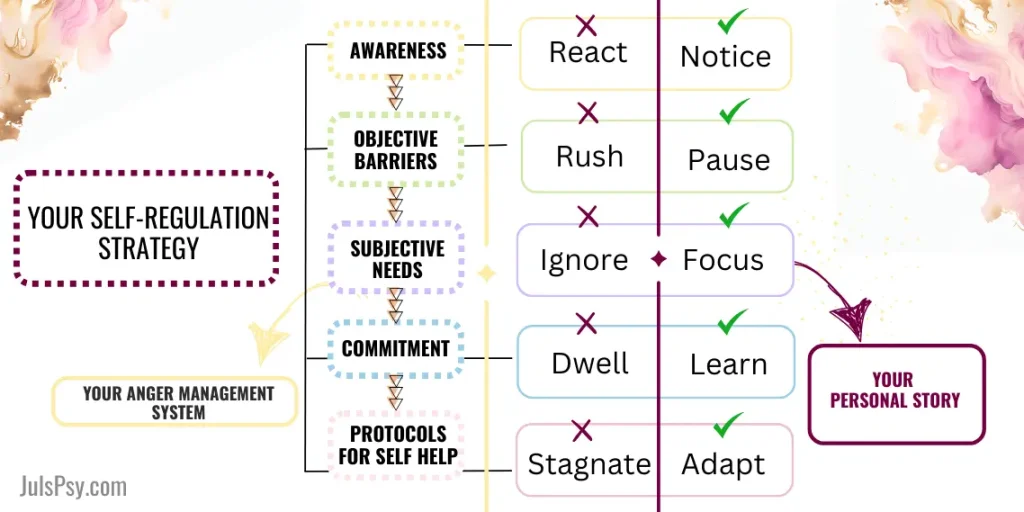
Burn With a Bright Flame, Not Out
Your Professional PsyTraining for Personal Development! Welcome to Juls’ Psychology Guide on Anger Management. We…